Bern Canton Travel Guide: Exploring Bern, Switzerland's Capital, and the Bernese Oberland
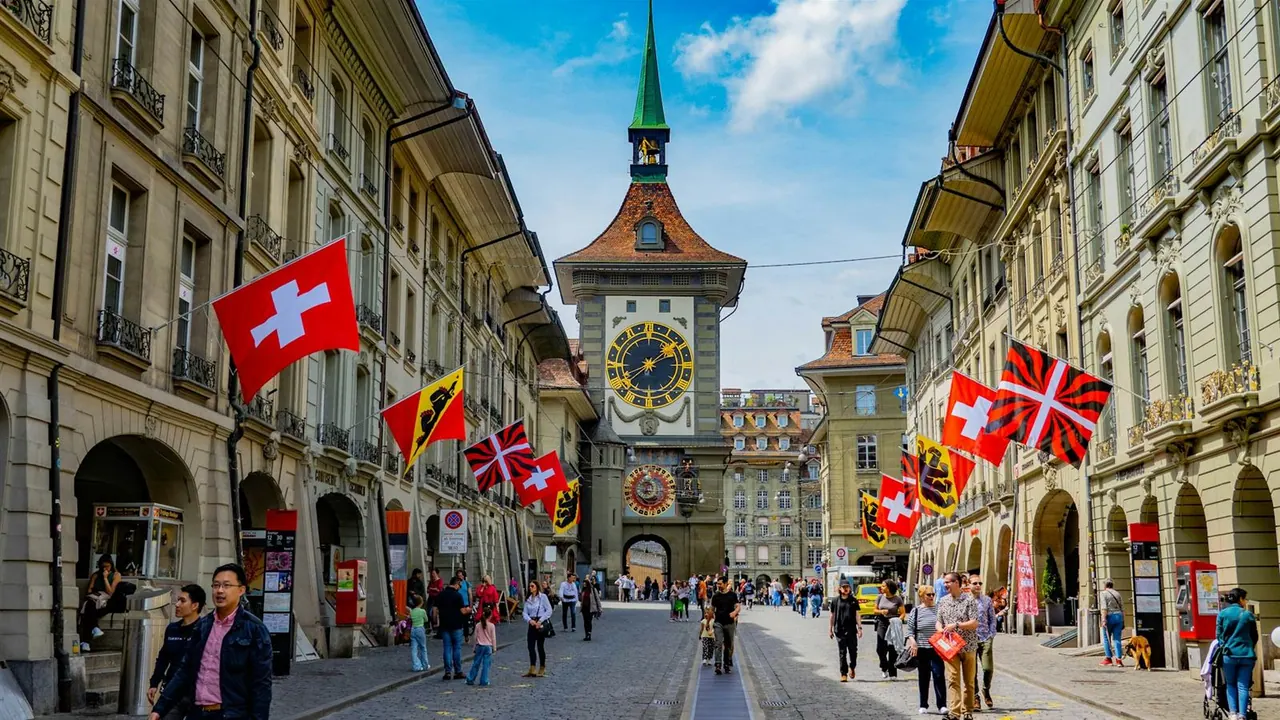
The canton of Bern stretches from the Swiss capital's arcaded medieval streets to some of the most dramatic peaks in the Alps. In one trip you can tour the seat of the Swiss government in the morning and stand on a glacier at 3,454 metres in the afternoon. Few regions offer such a mix of history, culture and alpine scenery so close together.
Top 5 Must-Visit Attractions in the Canton of Bern
1. Bern Old Town and the Zytglogge
Bern's Old Town, a UNESCO World Heritage Site since 1983, sits on a narrow peninsula wrapped by the turquoise Aare River. Its sandstone houses, colourful fountains and about six kilometres of covered arcades (Lauben) make it one of the best-preserved medieval cities in Europe. The centrepiece is the Zytglogge, a former city gate whose astronomical clock has entertained crowds for centuries with dancing bears, a crowing rooster and a jester just before the hour. At the edge of the Old Town, the BärenPark is home to the city's heraldic animals, the bears that gave Bern its name. Albert Einstein developed his theory of special relativity while living at Kramgasse 49, now the small but fascinating Einsteinhaus museum.
Booking tip: Guided tours inside the Zytglogge take you up to the clockwork itself, but groups are small and sell out in summer. Booking an Old Town walking tour that includes the clock tower online (See more) guarantees your spot and adds the stories behind the fountains and guild houses.
2. Federal Palace and Bern Minster
The domed Federal Palace (Bundeshaus) houses the Swiss parliament and government. Free guided tours run on many days when parliament isn't in session, and the terrace behind the building offers sweeping views over the Aare towards the Alps. A short walk away, the late-Gothic Bern Minster has the tallest church tower in Switzerland, at just over 100 metres. Its main portal shows the Last Judgment in more than 200 carved figures, and climbing the 300-plus steps rewards you with a panorama over the rooftops.
Booking tip: Federal Palace tours have limited places and require ID, so reserve online in advance. For an easier day, a city tour online (See more) combining the Minster, the parliament district and the Rose Garden viewpoint covers the highlights in a few hours.
3. Jungfraujoch – Top of Europe
The journey to the Jungfraujoch is one of Switzerland's great travel experiences. Trains climb from Interlaken via Grindelwald or Lauterbrunnen to Kleine Scheidegg, where the historic Jungfrau Railway, completed in 1912, tunnels through the Eiger and Mönch to Europe's highest railway station at 3,454 metres. At the top you'll find the Sphinx Observatory, an ice palace carved into the glacier, and views over the Aletsch Glacier.
Booking tip: Seats on the Jungfrau Railway are limited and reservations are strongly recommended, especially in summer. Booking a Jungfraujoch day trip online (See more), either with transport from Bern or Interlaken or as a guided tour, secures your seats and saves planning time.
4. Interlaken and the Lakes of Thun and Brienz
Interlaken, as its name suggests, sits between two lakes: the deep blue Lake Thun and the striking turquoise Lake Brienz. The town is the adventure capital of the Bernese Oberland, offering paragliding, canyoning and river rafting. For a gentler experience, take the funicular to Harder Kulm, where a viewing platform hangs over the valley with views of the Eiger, Mönch and Jungfrau. Historic paddle steamers cruise both lakes, stopping at villages such as Spiez, with its lakeside castle, and Iseltwald.
Booking tip: Paragliding and canyoning slots depend on weather and fill quickly in high season. Reserving online (See more) lets you lock in a time and often offers free cancellation if the weather turns.
5. Lauterbrunnen Valley and the Schilthorn
The Lauterbrunnen Valley is one of the most photographed places in Switzerland: a deep glacial valley lined with sheer cliffs and over 70 waterfalls. Don't miss Staubbach Falls, which drops nearly 300 metres beside the village, or Trümmelbach Falls, where glacial meltwater thunders through caves inside the mountain. From the valley, cable cars climb via car-free Mürren to the Schilthorn, where the revolving Piz Gloria restaurant appeared in the 1969 James Bond film On Her Majesty's Secret Service.
Booking tip: Combine the valley and the Schilthorn in one day with a guided tour online (See more), or book your cable car ticket online to avoid queues at peak times.
Practical Travel Tips for the Canton of Bern
Regional Transport
- Trains connect Bern to Interlaken in under an hour, and from there regional lines branch into the Oberland valleys.
- The Swiss Travel Pass covers trains, buses and lake boats across the canton and gives discounts on many mountain railways, including the final stretch to the Jungfraujoch.
- Regional passes such as the Berner Oberland Pass or Jungfrau Travel Pass can be better value if you'll spend several days in the mountains.
- Hotel guests in Bern usually receive a free card for city public transport.
Local Culinary Specialties
- Berner Platte: a generous platter of smoked meats and sausages served with sauerkraut, beans and potatoes.
- Emmentaler cheese from the nearby Emmental valley; visit the show dairy in Affoltern to see it made.
- Meringues from Meiringen, traditionally served with thick double cream.
- Zibelechueche (onion tart), especially during Bern's famous Zibelemärit onion market in late November.
Best Time to Visit
- Summer (June–September) is ideal for hiking, lake cruises and swimming in the Aare, a favourite local ritual.
- Winter (December–March) brings skiing in Grindelwald, Wengen and Mürren, plus Christmas markets in Bern.
- Spring and autumn are quieter, though some mountain lifts close for maintenance between seasons, so check schedules.
Conclusion: Plan Your Bern Canton Adventure Today
The canton of Bern combines Switzerland's political heart with its most iconic alpine landscapes. From the clock tower and bear park to the Jungfraujoch and Lauterbrunnen's waterfalls, it rewards both culture lovers and outdoor enthusiasts.
Start planning now: pick your dates, get a Swiss Travel Pass, and book your Jungfraujoch trip, city tours and adventure activities online (See more) before the best slots are gone.
Explore Switzerland city by city: Zurich, Geneva, Lucerne, Aarau and Herisau.
Cross-Linking & Extra Partner Links
Zurich Airport train links
Zurich Airport has direct trains to Zurich HB (about 10–15 minutes), Lucerne, Bern and Interlaken.
our partner site for Alpine tours
Our partner site (See more) offers excursions to Jungfraujoch, Mount Titlis, Mount Pilatus, Rigi, the Glacier Express, paragliding in Interlaken and lake cruises on Lake Lucerne.
Frequently Asked Questions
Where should I stay in Switzerland to save money?
Interlaken or Lauterbrunnen instead of Wengen or Mürren, Täsch instead of Zermatt, and business hotels in Zurich or Bern at weekends.
Do hotel guests get free public transport in Switzerland?
In many places, yes. Bern, Interlaken and other regions offer guest cards with free local transport for overnight guests.
Frequently Asked Questions
Where should I stay in Geneva?
Near Cornavin station or Pâquis for convenience and value, the lakefront for luxury, or the Old Town and Carouge for character.
Do Geneva hotels include free public transport?
Most Geneva hotels provide a Geneva Transport Card with free public transport during your stay. Lausanne and Montreux offer similar guest cards.
When is the best time to visit Lake Geneva?
May to September for warm weather and lake activities; spring and autumn offer lower prices.
Switzerland Car Rental Guide: Renting a Car Across All 26 Cantons & Alpine Passes
Switzerland is famous for its trains, but some of its most spectacular experiences are best enjoyed by car. Imagine driving the hairpin bends of the Furka Pass, stopping at turquoise lakes in the Bernese Oberland, exploring remote villages in Graubünden, or touring the vineyards of Lavaux and Valais at your own pace. With a car, you can reach places public transport serves less frequently and travel freely between all 26 cantons.
Driving in Switzerland is generally a pleasure, with excellent roads, clear signs and breathtaking scenery. But there are rules to know: the motorway vignette, strict speed limits, winter equipment, mountain pass closures and car-free resorts. In this Switzerland car rental guide, you'll learn everything you need to rent and drive confidently, from vignettes to Alpine passes, plus a step-by-step booking guide.
Driving in Switzerland Overview
Swiss motorways and roads
- Motorways (Autobahn / autoroute / autostrada): Fast, well maintained and connecting all major cities. A vignette is required.
- Main roads: Scenic routes through valleys and around lakes.
- Mountain roads and passes: Narrow, winding roads with spectacular views.
Speed limits
| Road type | Speed limit |
|---|---|
| Motorways | 120 km/h |
| Expressways (semi-motorways) | 100 km/h |
| Outside built-up areas | 80 km/h |
| In towns | 50 km/h (often 30 km/h in residential zones) |
Switzerland enforces speed limits strictly with speed cameras, and fines can be very high, rising sharply with the amount over the limit. Serious offences can lead to licence bans and even criminal proceedings.
Canton-by-canton travel
Switzerland's 26 cantons share national traffic rules, but some practical details vary locally, such as parking regulations, blue zones (parking discs required) and local tourist taxes. Three languages, German, French and Italian, appear on road signs depending on the region, plus Romansh in parts of Graubünden.
Key regions to explore by car
- Bernese Oberland: Interlaken, Grindelwald, Lauterbrunnen and Lake Thun.
- Valais: Zermatt (via Täsch), Saas-Fee, Aletsch Glacier and vineyards.
- Graubünden: St. Moritz, Davos, the Engadine and Swiss National Park.
- Central Switzerland: Lucerne, Engelberg and Lake Lucerne.
- Ticino: Lugano, Locarno and Verzasca Valley.
- Lake Geneva: Lausanne, Montreux and Lavaux.
Swiss Motorway Vignette & Toll Pass Rules Explained
The vignette
Switzerland doesn't charge per-kilometre motorway tolls. Instead, cars need an annual motorway vignette to use motorways and expressways.
- Price: CHF 40 for cars and motorcycles.
- Validity: One calendar year, from 1 December of the previous year to 31 January of the following year.
- Types: A traditional sticker on the windscreen or an e-vignette linked to your licence plate, bought online from the official Swiss government website.
- Fine: Driving on motorways without a valid vignette leads to a fine, and you must also buy the vignette on the spot.
- Buying online: The e-vignette is sold at the official site e-vignette.ch and is valid immediately; you only need the vehicle category, country of registration and number plate.
Rental cars
- Swiss-registered rental cars normally come with a valid vignette.
- Cars rented in neighbouring countries (France, Germany, Italy, Austria) may not have one, so you must buy it before entering Swiss motorways. This is common when renting from the French side of Geneva or Basel airports.
Other tolls
- Great St Bernard Tunnel (to Italy) charges a separate toll.
- Car trains (motorail) through mountains charge a fee per vehicle, including:
- Lötschberg (Kandersteg–Goppenstein), linking the Bernese Oberland with Valais.
- Furka (Realp–Oberwald), when the pass is closed.
- Vereina (Klosters–Sagliains), to the Engadine.
Car-free resorts
Some resorts are car-free, including Zermatt, Saas-Fee, Wengen, Mürren and Braunwald. For Zermatt, park in Täsch and take the shuttle train (about 12 minutes).
Summer vs. Winter Driving in Switzerland
Summer driving (June–October)
Summer is the best time to drive the famous Alpine passes, many of which close in winter:
- Furka Pass: Featured in a James Bond film, with views of the Rhône Glacier.
- Grimsel Pass: Lakes and dams.
- Susten Pass: Glaciers and waterfalls.
- Gotthard Pass (Tremola): Historic cobbled road.
- Klausen Pass and Nufenen Pass.
- Great St Bernard Pass: To Italy.
Tips
- Check pass opening dates, which typically run from June to October depending on snow.
- Uphill traffic generally has priority on narrow mountain roads, and postbuses have priority on many mountain routes (listen for their horn).
- Use lower gears on long descents to avoid overheating brakes.
Winter driving (November–April)
- Winter tyres: Not legally mandatory in Switzerland, but you can be held liable if your car isn't suitably equipped and causes an accident. Rental cars in winter are usually fitted with winter tyres; confirm when booking.
- Snow chains: May be required on mountain roads when signposted. Ask your rental company to include chains, and practise fitting them.
- Pass closures: Many high passes close in winter; use tunnels or car trains instead.
- Ski resorts: Roads to resorts like Verbier, Davos and St. Moritz are cleared, but conditions can change quickly.
- Clear snow and ice from the whole car before driving.
EV charging infrastructure
Switzerland has a growing network of EV charging stations, including fast chargers along motorways and in towns. Electric rental cars are increasingly available. Plan charging stops on long mountain drives, as cold weather and steep climbs reduce range.
Cross-Linking & Extra Partner Links
Combining a rental car with trains
Swiss trains are fast, punctual and scenic. Consider combining a rental car with trains, for example taking the train into car-free resorts or cities where parking is expensive.
our partner site for Swiss day trips
Our partner site (See more) offers Jungfraujoch, Mount Titlis, Glacier Express and lake cruise experiences that you can combine with your road trip.
Step-by-Step Walkthrough for Booking a Rental Car in Switzerland
- Choose your pickup airport:
- Zurich (ZRH): Best for central and eastern Switzerland.
- Geneva (GVA): Best for Lake Geneva and Valais. The airport has a Swiss side and a French side; rentals on the French side may be cheaper but may lack a Swiss vignette and may carry cross-border fees.
- Basel-Mulhouse (BSL/MLH): Also has Swiss and French sectors.
- Search and compare: Compare suppliers like Hertz, Avis, Europcar, Sixt and Enterprise on a trusted car rental comparison site.
- Select the right car: Choose a compact car for mountain roads and parking, or an SUV or 4x4 for winter conditions. Automatic cars are widely available but book early.
- Check inclusions: Confirm the vignette, winter tyres (in season), snow chains, mileage limits, cross-border permissions and insurance excess.
- Review insurance: Compare zero-excess cover at the desk with full coverage from the aggregator.
- Book with free cancellation: Re-check prices before your trip.
- Pick up the car: Bring your licence, passport, credit card in the driver's name and an IDP if required. Inspect the car and photograph any damage.
- Drive and park smart: Use park-and-ride facilities near cities, set your parking disc in blue zones and follow speed limits strictly.
- Return the car: Refuel (full-to-full), return on time and keep your receipts.
Frequently Asked Questions
Do I need a vignette to drive in Switzerland?
Yes, for motorways and expressways. It costs CHF 40 per calendar year and is available as a sticker or e-vignette. Swiss rental cars usually include it.
Can I drive to Zermatt?
No. Zermatt is car-free. Drive to Täsch, park there and take the shuttle train to Zermatt.
Are winter tyres mandatory in Switzerland?
Not by law, but drivers can be held liable if their car isn't suitably equipped for winter conditions. Rental cars in winter normally have winter tyres.
What are the best tips for driving Swiss mountain passes?
Check opening dates, use lower gears on descents, give priority to uphill traffic and postbuses, and avoid driving passes in bad weather.
How strict are speed camera fines in Switzerland?
Very strict. Fines rise sharply with speed, and serious violations can lead to licence bans and criminal proceedings.
Renting a car in Switzerland opens up Alpine passes, hidden valleys and lakeside villages across all 26 cantons. Know the vignette rules, respect speed limits, prepare for winter conditions and plan around car-free resorts. Combine your road trip with our partner site for mountain excursions.
Frequently Asked Questions
How many days in advance should I book tours in Switzerland?
There's no single rule for every tour in Switzerland, but as a general guideline, book your must-see experiences several days to a week in advance, and treat anything with limited daily capacity, such as timed entries, as a priority to secure early.
Do I need to print my e-tickets for attractions in Switzerland?
Generally not, since mobile tickets work for almost everything in Switzerland, so showing your QR code on your phone is enough at the entrance. Just make sure your battery doesn't run out beforehand, and keep a saved screenshot as a backup.
Where do most walking tours and excursions in Switzerland start?
Tour operators in Switzerland commonly use the area around Bern Old Town and the Zytglogge as a starting point, since it's central and recognisable. Always double-check the exact meeting point on your voucher, as it can vary slightly between tour providers.
What should I know before visiting Bern Old Town and the Zytglogge in Switzerland?
If Bern Old Town and the Zytglogge is on your list in Switzerland, reserve your ticket in advance when that option exists, and plan around the quieter early morning or late afternoon hours rather than midday. Opening times can vary by season, so it's worth confirming them close to your visit date.