Neuchâtel Canton Travel Guide: Neuchâtel, Watchmaking Heritage and the Wild Jura
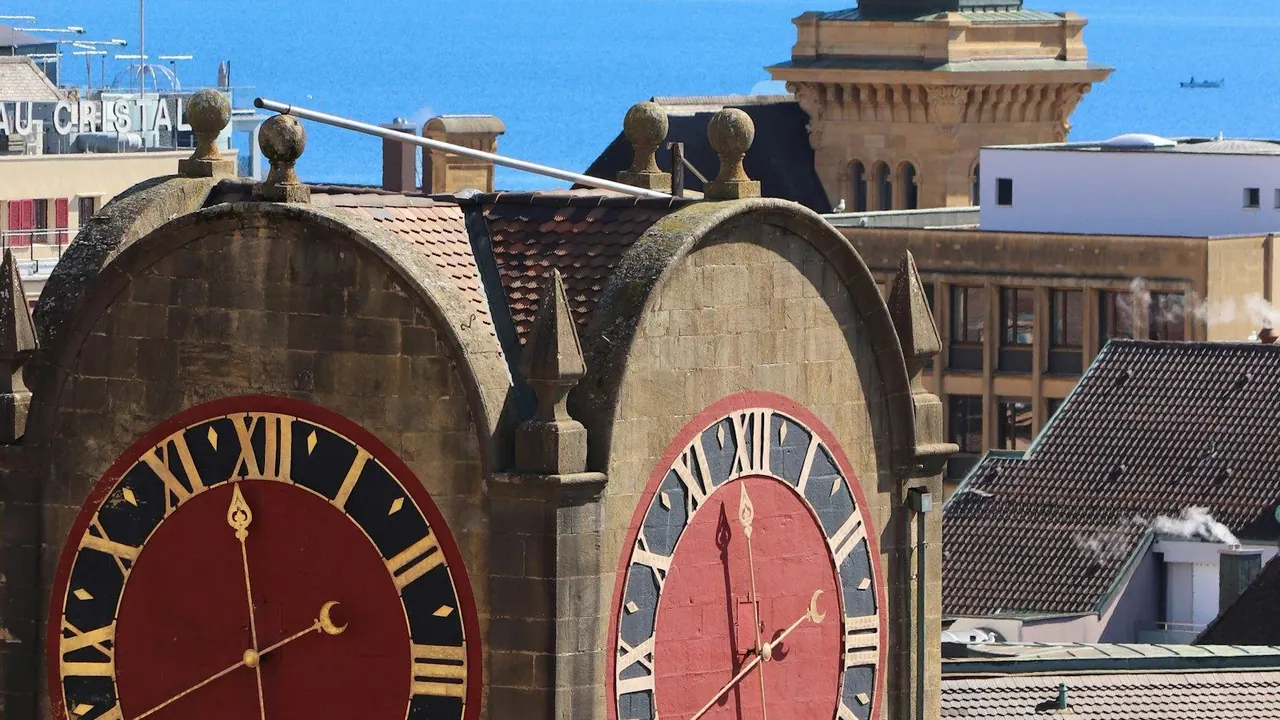
The canton of Neuchâtel stretches from the vineyards on the shores of Lake Neuchâtel to the high plateaus of the Jura mountains. It's the cradle of Swiss watchmaking, the birthplace of absinthe and home to one of the most spectacular natural amphitheatres in Europe. Its capital, built of honey-coloured stone, is so golden that the writer Alexandre Dumas famously compared it to a town carved from butter.
Top 5 Must-Visit Attractions in the Canton of Neuchâtel
1. Neuchâtel Old Town, Castle and Collegiate Church
The old town of Neuchâtel is built from yellow Hauterive limestone, giving its streets a warm glow. Wander past Renaissance fountains and elegant 18th-century mansions up to the hill where the Château and Collegiate Church stand side by side. The church, begun in the 12th century, houses a remarkable cenotaph with painted statues of the Counts of Neuchâtel. Interestingly, Neuchâtel was a principality ruled by the kings of Prussia from 1707 until it became a fully Swiss republican canton in 1848. From the castle terrace, you can see across the lake to the Alps on a clear day.
Booking tip: Guided tours of the castle, which still houses the cantonal government, take place on set dates. Book via the tourist office or look for city walks online (See more) that cover both the old town and its Prussian history.
2. Laténium Archaeology Museum
On the lakeshore at Hauterive, the Laténium is Switzerland's largest archaeology museum. It tells the story of the region from the last Ice Age to the Middle Ages, with a particular focus on the Celtic La Tène culture, named after a site at the eastern end of Lake Neuchâtel where thousands of Iron Age objects were discovered. The outdoor park features reconstructed lakeside dwellings, a Gallo-Roman boat and a Roman garden.
Booking tip: Buy tickets online to skip lines during school holidays, and check for guided tours and family workshops, which often need advance reservation.
3. Creux du Van
The Creux du Van is one of Switzerland's most impressive natural sites: a vast rocky cirque about 1.4 km wide, with sheer cliffs up to 160 metres high, formed by erosion and glaciers. Hiking trails lead from Noiraigue up to the rim, where you'll enjoy breathtaking views and may spot ibex and chamois grazing near the edge. On clear days, you can see as far as the Alps and Mont Blanc.
Booking tip: The hike is free, but a guided nature walk booked online (See more) or with local guides helps you learn about the area's geology and wildlife. Stay behind the safety lines at the cliff edge.
4. La Chaux-de-Fonds and Le Locle
High in the Jura, the twin towns of La Chaux-de-Fonds and Le Locle were rebuilt after fires in the 18th and 19th centuries with a grid street layout designed for the watchmaking industry. Their unique urban planning earned UNESCO World Heritage status in 2009. In La Chaux-de-Fonds, the International Museum of Horology displays over 4,500 timepieces, from sundials to atomic clocks. The town is also the birthplace of architect Le Corbusier, and you can visit his early works, including the Maison Blanche. Nearby, the Saut du Doubs waterfall can be reached by boat from Les Brenets.
Booking tip: Guided walking tours of the UNESCO watchmaking towns are available through local tourism offices, and some Le Corbusier houses require timed tickets booked online.
5. Val-de-Travers – The Home of Absinthe
The Val-de-Travers is the birthplace of absinthe, the famous "green fairy." The drink was banned in Switzerland from 1910 until 2005, and during that time local producers kept the tradition alive in secret. In Môtiers, the Maison de l'Absinthe tells this fascinating story in a former courthouse, with tastings at the end. Nearby, the Asphalt Mines of La Presta offer guided tours through underground galleries where asphalt was mined for centuries.
Booking tip: Distillery tours and the asphalt mine tours are guided only, with limited spaces. Book online in advance, especially for weekends and summer holidays.
Practical Travel Tips for the Canton of Neuchâtel
Regional Transport
- Trains connect Neuchâtel to Bern in about 35 minutes and to Lausanne in about 40 minutes.
- The Fun'ambule funicular links Neuchâtel's train station to the lakeshore and university.
- Regional trains climb to La Chaux-de-Fonds in about 30 minutes.
- The Swiss Travel Pass covers trains, buses and lake boats, and grants free entry to many museums.
- Lake boats connect Neuchâtel with Murten and Biel on the Three Lakes.
Local Culinary Specialties
- Tripes à la neuchâteloise: a traditional tripe dish, a local classic.
- Saucisse au foie: a liver sausage, typically served with leeks and potatoes.
- Taillaule: a sweet, light brioche, often shaped into decorative patterns.
- Œil-de-Perdrix: a pale Pinot Noir rosé that originated in Neuchâtel.
- Non-filtered Neuchâtel: a cloudy young white wine released each January.
Best Time to Visit
- Summer (June–August): lake swimming, hiking at Creux du Van and lake cruises.
- Late September: the Fête des Vendanges, one of Switzerland's largest wine harvest festivals.
- Autumn: colourful forests and vineyards in the Jura.
- Winter: cross-country skiing on the Jura plateaus.
Conclusion: Plan Your Neuchâtel Adventure
The canton of Neuchâtel combines golden old towns, world-class watchmaking heritage, wild Jura landscapes and the mysterious history of absinthe. It's a region full of surprises for travellers who want to discover a different side of Switzerland.
Plan ahead: check the Fête des Vendanges dates, book your guided tours and museum tickets online, and get ready to explore this fascinating corner of Switzerland.
Explore more of Switzerland: continue to Stans, Sarnen or Schaffhausen, or read the full Switzerland travel guide.
Frequently Asked Questions
How many days in advance should I book tours in Neuchâtel?
For popular experiences in Neuchâtel, it's a good idea to book skip-the-line tickets at least 3-5 days ahead, especially in high season. Smaller or less popular tours can often be booked a day or two in advance, but booking early guarantees the time slot you want.
Do I need to print my e-tickets for attractions in Neuchâtel?
No, in the vast majority of cases, showing the QR code on your smartphone is enough to enter attractions and activities in Neuchâtel. Just keep your phone charged and your screen brightness turned up, and it's smart to save an offline screenshot in case you lose signal.
Where do most walking tours and excursions in Neuchâtel start?
Most walking tours and excursions in Neuchâtel begin near Neuchâtel Old Town, Castle and Collegiate Church, one of its best-known landmarks, or at a specific meeting point confirmed on your voucher after booking. It's worth arriving five to ten minutes early so your guide can easily spot you in the crowd.
What should I know before visiting Neuchâtel Old Town, Castle and Collegiate Church in Neuchâtel?
Before visiting Neuchâtel Old Town, Castle and Collegiate Church, it's worth booking your entry ticket online in advance where possible, since this is one of Neuchâtel's most popular sights and queues can build up fast, especially around midday. Arriving early or later in the afternoon usually means smaller crowds and better photos, and it's always a good idea to check the official opening hours for your travel dates, since these can change seasonally.